Two researchers in lab gowns working at an open freezer in a stem cell laboratory.
Image credit

Lab Shot - Freezer Door

Photography by Gavan Mitchell, University of Melbourne ADAPT Lab

Resources

Find publications, stem cell generator facilities, and related platforms supporting Australian stem cell research.

Registry Publications

Stem Cell Reports 2024 Oct 8

Guidelines for managing and using the digital phenotypes of pluripotent stem cell lines.

Wells CA, Guhr A, Bairoch A, Chen Y, Hu M, Löser P, Ludwig TE, Mah N, Mueller SC, Seiler Wulczyn AEM, Seltmann S, Rossbach B, Kurtz A.

Each pluripotent stem cell line has a physical entity as well as a digital phenotype, but linking the two unambiguously is confounded by poor naming practices and assumed knowledge. Registration gives each line a unique and persistent identifier that links to phenotypic data generated over the lifetime of that line. Registration is a key recommendation of the 2023 ISSCR Standards for the use of human stem cells in research. Here we consider how community adoption of stem cell line registration could facilitate the establishment of integrated digital phenotypes of specific human pluripotent stem cell (hPSC) lines.

View publication 

Stem Cell Reports 2025 Oct 14

How FAIR is metadata for human pluripotent stem cells?

Hu M, Ankeny RA, Santos D, Wells CA.

The rapid and global expansion of stem cell research over the last two decades necessitates coordinated and effective management of information describing stem cell lines and accompanying data resources. Here, we evaluate the maturity of the field by applying FAIR data principles—findable, accessible, interoperable, and reusable—to assess the quality of information describing human pluripotent stem cells (hPSCs) in dedicated data infrastructure. We identified a lack of coordination across different jurisdictions that prevents effective information sharing, such as the absence of persistent digital identifiers, inconsistent data standards, and restrictive sharing policies. Using Australia, the United States, Japan, and Europe as case studies, we underscore the need for national infrastructure to support comprehensive cell line cataloging. This is the first systematic evaluation of FAIR principles in the field and indicates that improving metadata standardization and cross-platform coordination will enhance data reuse and strengthen the value of local resources.

View publication 

Stem Cell Research 2024 Sep

Australian researchers' perceptions and experiences with stem cell registration.

Hu M, Santos D, Lopes E, Nicol D, Kurtz A, Mah N, Muller S, Ankeny RA, Wells CA.

The recently issued ISSCR standards in stem cell research recommend registration of human pluripotent stem cell lines (hPSCs). Registration is critical to establishing stem cell provenance and connecting cell lines to data derived on those lines. In this study, we sought to understand common barriers to registration by conducting interviews with forty-eight Australian stem cell stakeholders, including researchers, clinicians, and industry professionals. Australian stem cell researchers do not routinely register their lines, and only a third of those Australian lines captured by an international registry have fully completed the registration process. Most registered Australian cell lines lack complete information about their ethical provenance or key pluripotency characteristics. Incomplete registration is poorly aligned with the goals of open science on which registries are founded. Users also expressed concerns about the quality of the incomplete information provided to the resource. Registration was considered negatively, for instance as a hurdle or barrier to publication, which impacted on user perceptions of usefulness of registration and lowered the likelihood that they would engage with registries to find resources. Broader adoption of registration by journals, and continued advocacy by stem cell societies, will be important levers for awareness and engagement with registration. Although the Australian community represents a small fraction of potential registry users, the results of this study suggest ways for journals, registries, funders, and the international stem cell community to improve registration compliance.

View publication 

Journal of Bioethical Inquiry 2026 Sep

Exploring Patient Organization Involvement in Stem Cell Research: Insights from the Lifeworld.

Lopes E, Ankeny R, Santos D, Hu M, Whitton T, Ivanov M, Leach J, Nicol D, Wells C.

This article examines the role of patient organizations as mediators between patients and researchers in stem cell research in Australia. We conducted semi-structured interviews with stem cell researchers and patient organization representatives as part of a broader project to deepen public understanding and foster more robust scientific practices in stem cell-based research and therapies. We used Habermas's Theory of Communicative Action as our theoretical framework to explore the relationships between patient organizations and researchers. Using this framework allowed the identification of two different ways of conceptualizing health and illness—one based on patients' experiences, which we call "the lifeworld," and another grounded on researchers', health professionals', and policymakers' professional perspectives, which we call "the rational system." We found that the different conceptualizations identified influenced the interactions between patients and researchers (and other professionals involved in the healthcare system). Patient organizations, then, act as articulators of patients' viewpoints in this scenario, which can have advantages and disadvantages. We also found that researchers need to develop less transactional forms of communication with these organizations and that policymakers and regulators could benefit from developing guidelines to encourage researchers to use diverse strategies to engage more meaningfully with patients at individual and organizational levels.

View publication 

Stemformatics Publications

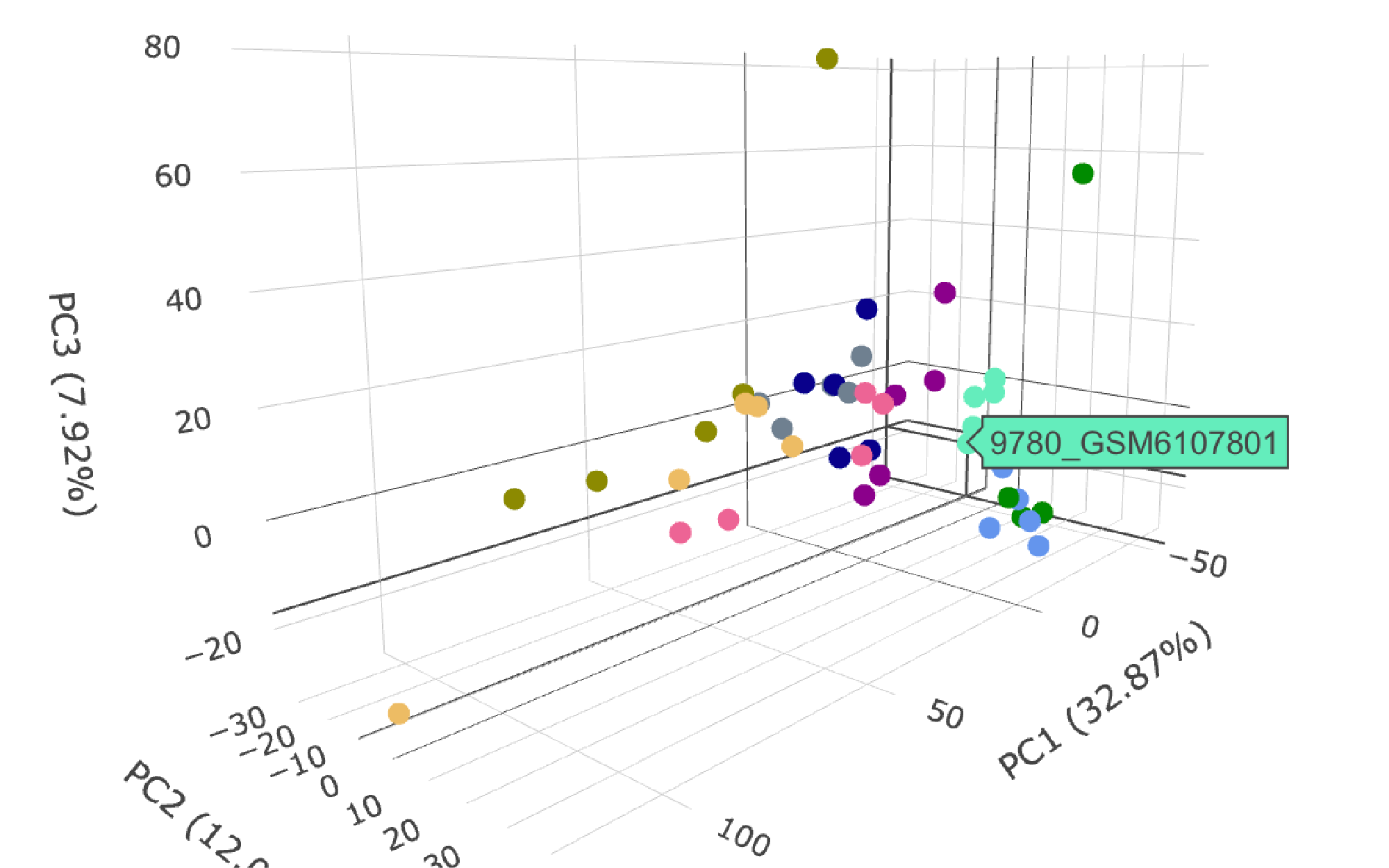
Stemformatics visualization comparing gene expression profiles.

The Registry forms part of a larger digital ecosystem developed to support Australian stem cell researchers.

Stemformatics is a data visualization and collaboration platform that allows researchers to quickly view gene expression profiles in human pluripotent stem cells, and stem-cell derived tissues.

Stemformatics website 

Stem Cell Reports 2024 Jun 11

Stemformatics data portal enables transcriptional benchmarking of lab-derived myeloid cells.

Choi J, Butcher SK, Angel PW, Bransfield J, Barry J, Faux N, Shaban B, Pillai P, Michalewicz A, Wells CA.

Stemformatics.org has been serving the stem cell research community for over a decade, by making it easy for users to find and view transcriptional profiles of pluripotent and adult stem cells and their progeny, comparing data derived from multiple tissues and derivation methods. In recent years, Stemformatics has shifted its focus from curation to collation and integration of public data with shared phenotypes. It now hosts several integrated expression atlases based on human myeloid cells, which allow for easy cross-dataset comparisons and discovery of emerging cell subsets and activation properties. The atlases are designed for external users to benchmark their own data against a common reference. Here, we use case studies to illustrate how to find and explore previously published datasets of relevance and how in-vitro-derived cells can be transcriptionally matched to cells in the integrated atlas to highlight phenotypes of interest.

View publication 

Nucleic Acids Research 2019 Jan 8

Stemformatics: visualize and download curated stem cell data.

Choi J, Pacheco CM, Mosbergen R, Korn O, Chen T, Nagpal I, Englart S, Angel PW, Wells CA.

Stemformatics is an established gene expression data portal containing over 420 public gene expression datasets derived from microarray, RNA sequencing and single cell profiling technologies. Developed for the stem cell community, it has a major focus on pluripotency, tissue stem cells, and staged differentiation. Stemformatics includes curated 'collections' of data relevant to cell reprogramming, as well as hematopoiesis and leukaemia. Rather than simply rehosting datasets as they appear in public repositories, Stemformatics uses a stringent set of quality control metrics and its own pipelines to process handpicked datasets from raw files. This means that about 30% of datasets processed by Stemformatics fail the quality control metrics and never make it to the portal, ensuring that Stemformatics data are of high quality and have been processed in a consistent manner. Stemformatics provides easy-to-use and intuitive tools for biologists to visually explore the data, including interactive gene expression profiles, principal component analysis plots and hierarchical clusters, among others. The addition of tools that facilitate cross-dataset comparisons provides users with snapshots of gene expression in multiple cell and tissues, assisting the identification of cell-type restricted genes, or potential housekeeping genes. Stemformatics is freely available at stemformatics.org.

View publication 

Stem Cell Generator Facilities

Stemcore

STEMCORE is a facility at the University of Queensland that provides a wide range of services related to pluripotent stem cells, including generation, editing, characterisation and banking.

Stemcore website 

Victor Chang Cardiac Research Institute

Victor Chang Cardiac Research Institute Innovation Centre is based in NSW, and offers a complete pipeline from the generation of induced pluripotent stem cells (iPSCs), differentiation to 2D and 3D formats, as well as CRISPR-Cas9 based gene editing.

Victor Chang website 

MCRI iPSC Derivation and Gene Editing Facility

MCRI iPSC derivation and gene editing facility is based at the Royal children’s hospital in Victoria, and offers a streamlined one-step gene-editing/reprogramming protocol that utilises episomal reprogramming vectors and the Cas9/CRISPR gene-editing system to facilitate the rapid and efficient generation of clonally derived gene-edited iPSC lines, among other gene editing services.

MCRI facility website 

Stem Cell Disease Modelling Laboratory

University of Melbourne stem cell and disease modelling facility, Victoria, focuses on the production of large-scale iPSC cohorts. Our service also includes training of researchers in these procedures.

University of Melbourne website 

Human Pluripotent Stem Cell Registry

Human Pluripotent Stem Cell Registry

The Australian pluripotent stem cell registry thanks hPSCreg.org for advice in setting up our local registry, and for providing naming tools and conventions that we follow.

hPSCreg website 
Back to top