Two researchers at a microscope, one holding up a slide to the light while the other looks on.
Image credit

Associate Professor Bryony Nayagam and Peiyao Zhong inspect developing vestibular epithelial cells.

Photography by Gavan Mitchell, University of Melbourne ADAPT Lab

FAQs

Find answers about the Registry, why stem cell registration matters, how to register and update your cell lines, how we collect and review information, and how to access Registry data.

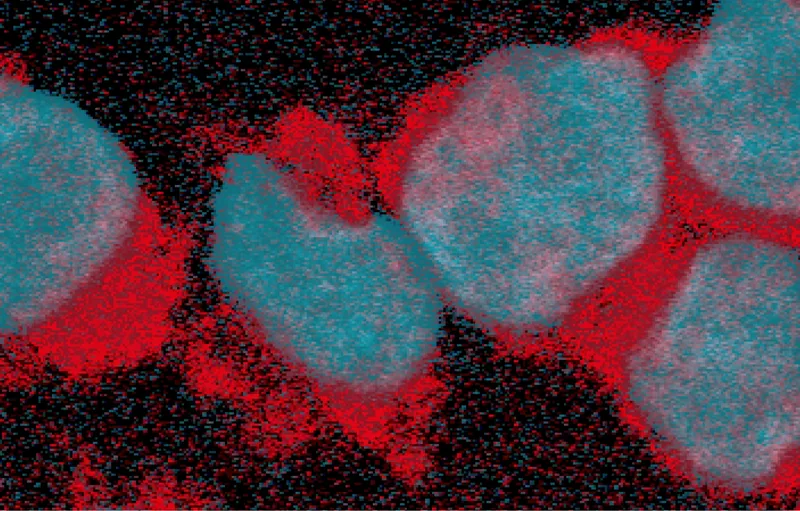
Microscopy image of a stem cell colony with white and red staining, titled Nanog Caterpillar.
Image credit

Nanog Caterpillar

A stem cell colony forms a caterpillar-like pattern as researchers investigate signals associated with cell identity. This image illustrates how comparisons of gene expression across cultures could help explore stem cell states, differentiation and responses to experimental conditions.

Photography by the Wells Laboratory

About the Australian Pluripotent Stem Cell Registry

What is the Australian Stem Cell Registry?

The Australian Stem Cell Registry is a database containing information about human pluripotent cell lines that have been derived in Australian laboratories or by Australian researchers, or made from human tissues donated by Australians for medical research. The information about each stem cell line shown in the Australian Stem Cell Registry has been reviewed by our curator. This means that the Australian Stem Cell Registry is a trusted source of information that supports discovery and sharing of authenticated stem cell lines to study healthy human development, ageing, or to understand and treat diseases impacting on the Australian community.

How does the Australian Stem Cell Registry differ from a biobank?

The Australian Stem Cell Registry is entirely virtual, and represents a distributed network of stem cell laboratories, each hosting their own collection of stem cell lines. We don't physically hold any stem cell lines. This means the registry is different to a biobank because biobanks are a physical collection of biological resources such as tissues and cell lines.

Who funds the Australian Stem Cell Registry?

The Australian Stem Cell Registry gratefully acknowledges funding from Phenomics Australia, the National Collaborative Research Infrastructure Strategy (NCRIS), and the Medical Research Future Fund.

Is there ethical/ legal oversight over the Australian Stem Cell Registry?

The Australian Stem Cell Registry has been reviewed by The University of Melbourne Human Research Ethics Team (2025-28113-73724-3). The Australian Stem Cell Registry website is operated by The University of Melbourne. The University’s online terms apply to your access and use of this site.

I'm interested in collaborating with the Australian Stem Cell Registry. Who can I contact?

If you are interested in collaborating with the Australian Stem Cell Registry, please contact us.

Where can I find out more information about stem cells and stem cell treatments?

Please check out Stem Cells Australia, the Australasian Society for Stem Cell Research and the International Society for Stem Cell Research for further information about the Australian and global stem cell landscape.
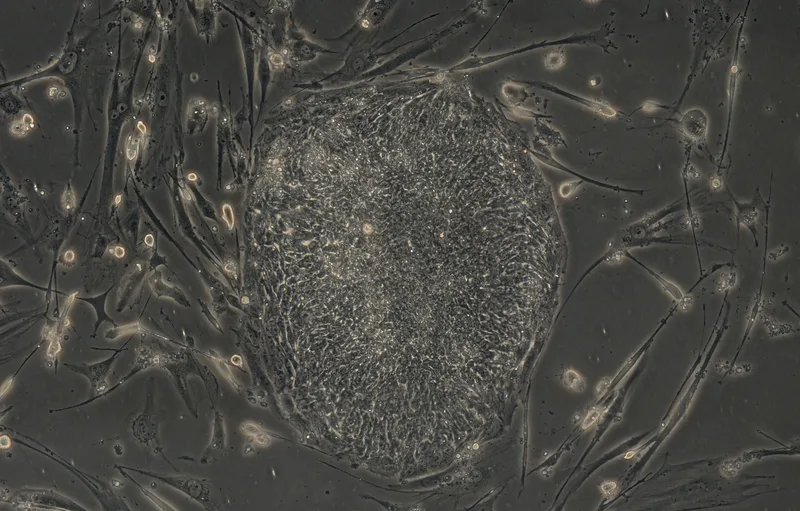
Phase-contrast micrograph of a colony of induced pluripotent stem cells made from human skin cells, surrounded by fibroblasts.
Image credit

Induced stem cells from adult skin

The human skin cells pictured contain genetic modifications that make them pluripotent, essentially equivalent to embryonic stem cells. A scientific team from the University of Wisconsin-Madison including researchers Junying Yu, James Thomson, and their colleagues produced the transformation by introducing a set of four genes into human fibroblasts, skin cells that are easy to obtain and grow in culture.

Induced stem cells from adult skin 03 — James Thomson, University of Wisconsin-Madison. Source: NIGMS Image Gallery. CC BY-NC-SA 3.0.

What is Stem Cell Registration?

What is cell line registration?

Registration of pluripotent cell lines does two things. Firstly, we assign a unique and persistent digital identifier to each cell line. This is a machine-readable ID that permanently links cell lines to information about how the cell line was made, including the ethical provenance of that line, whether it is associated with a particular disease, if it is related to a different stem cell line, and if it has been gene-edited. Registered stem cell lines have also been reviewed for key data associated with their authenticity, including whether they've been tested for pluripotency, if records have been kept about their growth characteristics or differentiation potential. We also help researchers stay up to date by linking registry records with publications describing the stem cell line.

Why is cell line registration important?

Registration is fundamental to good scientific practice, forming a key part of FAIR and CARE principles for digital research. Persistent identifiers of registered stem cell lines follow a cell line across databases, and through research outputs like publications, helping us connect data generated from the same or related stem cell lines. It is the equivalent of a cell's ORCID or DOI. In contrast, common laboratory names for a cell line are more like a nickname: these can be useful in the lab but may not be unique (e.g., the same nickname can be used in different labs), and are often not informative about where and how the line was made. Registered stem cell lines may still use a non-unique lab 'nickname' but can be unambiguously found through their registered identifier.

Do I have to register my cell lines?

Registration of cell lines in an international open sourced registry such as the Australian Stem Cell Registry forms part of the International Society for Stem Cell Research Standards for Human Stem Cell Use in Research (2023, Recommendation 1.4.1). Some journals also require registration of cell lines before publication. Although mandated registration is not yet widespread, the benefits of registration for researchers and the scientific community provide strong and compelling reasons for you to consider registering your cell lines.

What cell types are included in the Australian Stem Cell Registry?

We capture information about human induced pluripotent stem cell lines and embryonic stem cell lines.

Does the Australian Stem Cell Registry include information about mice or other species?

The Australian Stem Cell Registry currently includes only human pluripotent cell lines, however, we hope to capture additional stem cell populations of interest to the Australian Research Community in the future. If you are interested in collaborating in this area, please contact us.

Does searching or registering cells in the Australian Stem Cell Registry cost any money?

There are no fees to browse or register lines in the Australian Stem Cell Registry. Development and maintenance of the registry is paid for by the Australian government through the National Collaborative Research Infrastructure Strategy (NCRIS), and the Medical Research Future Fund.

How are cell lines in the Australian Stem Cell Registry named?

The Australian Stem Cell Registry has adopted hPSCreg naming conventions, and works together with hPSCreg so that cell line identifiers are shared between hPSCreg and the Australian Stem Cell Registry. Further information can be found in hPSCreg’s naming conventions.

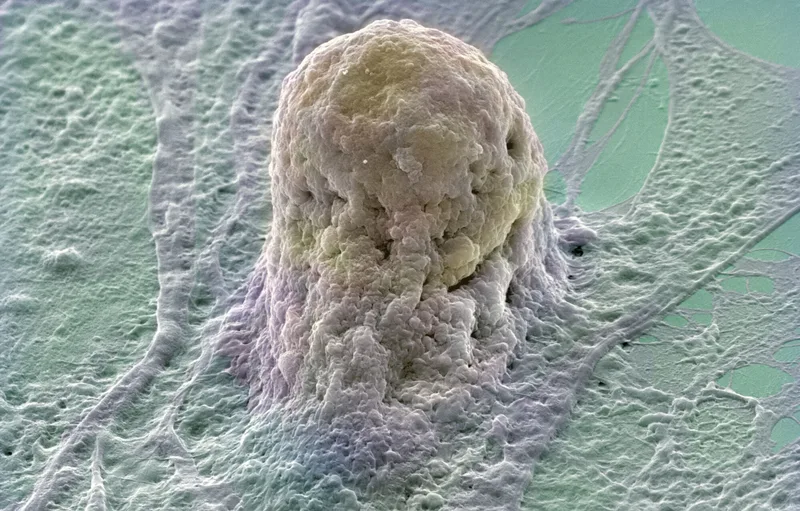
Coloured scanning electron micrograph of a human embryonic stem cell growing on a layer of fibroblasts.
Image credit

Human embryonic stem cell

Human embryonic stem cell (gold) growing on a layer of supporting cells (fibroblasts). Stem cells are derived from very early embryos and can either be grown to stay in their original state or triggered to form almost any type of human cell. The fibroblasts provide special factors that maintain the stem cells in their original state. The stem cell appears to be grasped by the underlying fibroblast.

Human embryonic stem cell — Annie Cavanagh. Source: Wellcome Collection. CC BY-NC 4.0.

How do I register lines with the Registry?

How do I register my cell line?

Please contact us if you are interested in registering your cell line.

I have many cell lines to register. Can you help me with bulk registration?

Yes. Please contact us if you would like further information or to work with us.

Does the Australian Stem Cell Registry only register cell lines if they have been made in Australia?

The Australian Stem Cell Registry registers pluripotent cell lines and their subclones which have been generated in Australia.

What if my cell line is a subclone of a non-Australian cell line, or a line made by a different institute?

If your subclone was generated in Australia, it can be registered in the Australian Stem Cell Registry. We will ask you to provide the unique digital identifier of your cell's parental cell line so that we can correctly link to its registration information in our Registry or in hPSCreg.

Can you hide my cell line's information until I am ready to publish?

Yes. The Australian Stem Cell Registry is able to embargo your line's information until you are ready for it to be visible to the public.

How do I update information about my cell lines?

Please contact us if you are interested in registering your cell line.

I generated a stem cell line many years ago. Can I register it?

Yes. Please contact us to discuss registration of historical lines.

How does the Australian Stem Cell Registry find cell lines to register?

The Australian Stem Cell Registry sources lines from Australian stem cell researchers and production facilities, scientific literature, and international registries such as hPSCreg. We are actively engaging with members of the Australian stem cell community to develop work flows which encourage registration as a routine practice in the Australian Stem Cell Community, and we encourage researchers to reach out to our curation team to assist them in this regard.

Are researchers given the opportunity to review information that the Australian Stem Cell Registry has compiled about their cell line/s?

Researchers are welcome to contact us at any time should they wish to discuss their cell line/s. We do our best to ensure the accuracy and consistency of the metadata we compile and will reach out to researchers when clarification of metadata is required.

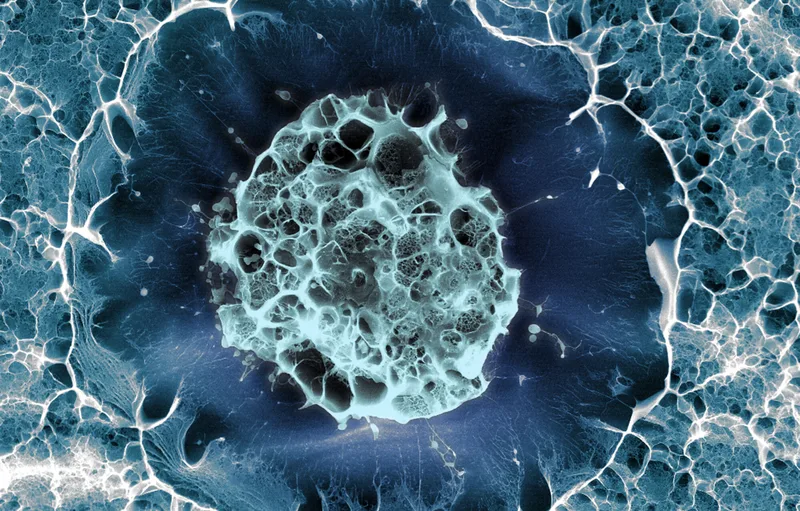
False-coloured cryogenic scanning electron micrograph of a human stem cell embedded in a porous hydrogel.
Image credit

Human stem cell embedded in a 3D matrix

False-coloured cryogenic scanning electron micrograph (Cryo-SEM) of a single human stem cell (centre of image) embedded within a porous hydrogel matrix. The structure and properties of the hydrogel matrix were designed to mimic those of the cell's native environment in the bone marrow. Imaging stem cells in a 3D environment provides valuable insight into the bidirectional physical interactions between a stem cell and its 3D niche. The diameter of the cell is approximately 15 micrometres.

Human stem cell embedded in a 3D matrix, Cryo SEM — Silvia A. Ferreira, Cristina Lopo and Eileen Gentleman. Source: Wellcome Collection. CC BY 4.0.

How does the Registry build its database of stem cell lines?

How does the Australian Stem Cell Registry curate cell line metadata?

Our cell line metadata has been compiled from information in the public domain (eg. publications, hPSCreg) through a combination of manual and computational efforts. We are actively working on pipelines to assist in automating curation of metadata from Australian iPSC facility QC reports, and are exploring large language models to support curation from published literature. Further details will be provided when these processes are incorporated into our workflow.

Does the Australian Stem Cell Registry review cell line information before it is shown on the website?

The extent to which cell line metadata has been reviewed is reflected in our Curation Status, which is shown on the top right hand side of each Cell line page. Status classifications include:

  • Not yet reviewed: the metadata shown for the cell line has been imported from an external source and has not been reviewed by our curator.
  • Reviewed: the metadata shown for the line has been compared to published information about the line and no concerns or conflicts were noted.
  • Flagged for further review: We would like to seek further information about this line from the cell line’s generator/ maintainer. This could mean a conflict has been identified in the cell line's metadata, or that we would like further information to update the line's record.
How do I provide feedback about someone else's cell line metadata?

Please contact us if you would like to provide feedback about the metadata related to cell lines within the Registry.

Does the Australian Stem Cell Registry use Artificial Intelligence (AI) to curate data?

The Australian Stem Cell Registry team is actively exploring large language models to assist in preliminary curation of cell line metadata, accuracy checking of cell line information and data harmonisation. Further details will be provided about these processes when they are integrated into our workflow.

Researcher in a lab gown checking a rack of frozen cell boxes.
Image credit

Dr Miguel Ángel Berrocal Rubio monitoring frozen cells.

Miguel's doctoral thesis involved investigating the mechanisms that regulate plasticity of macrophage behaviors, using an in vitro model of induced pluripotent stem cell to macrophage differentiation.

Photography by Gavan Mitchell, University of Melbourne ADAPT Lab

How can I access information housed in The Registry?

What information/ reports can I download from the Australian Stem Cell Registry?

We are currently seeking feedback regarding the types of reports which will be useful to users. Please contact us if you are interested in obtaining specific data reports from the Australian Stem Cell Registry.

Can I access the Australian Stem Cell Registry via an API (Application Programming Interface)?

We are working towards allowing API access to the Australian Stem Cell Registry.

Back to top